

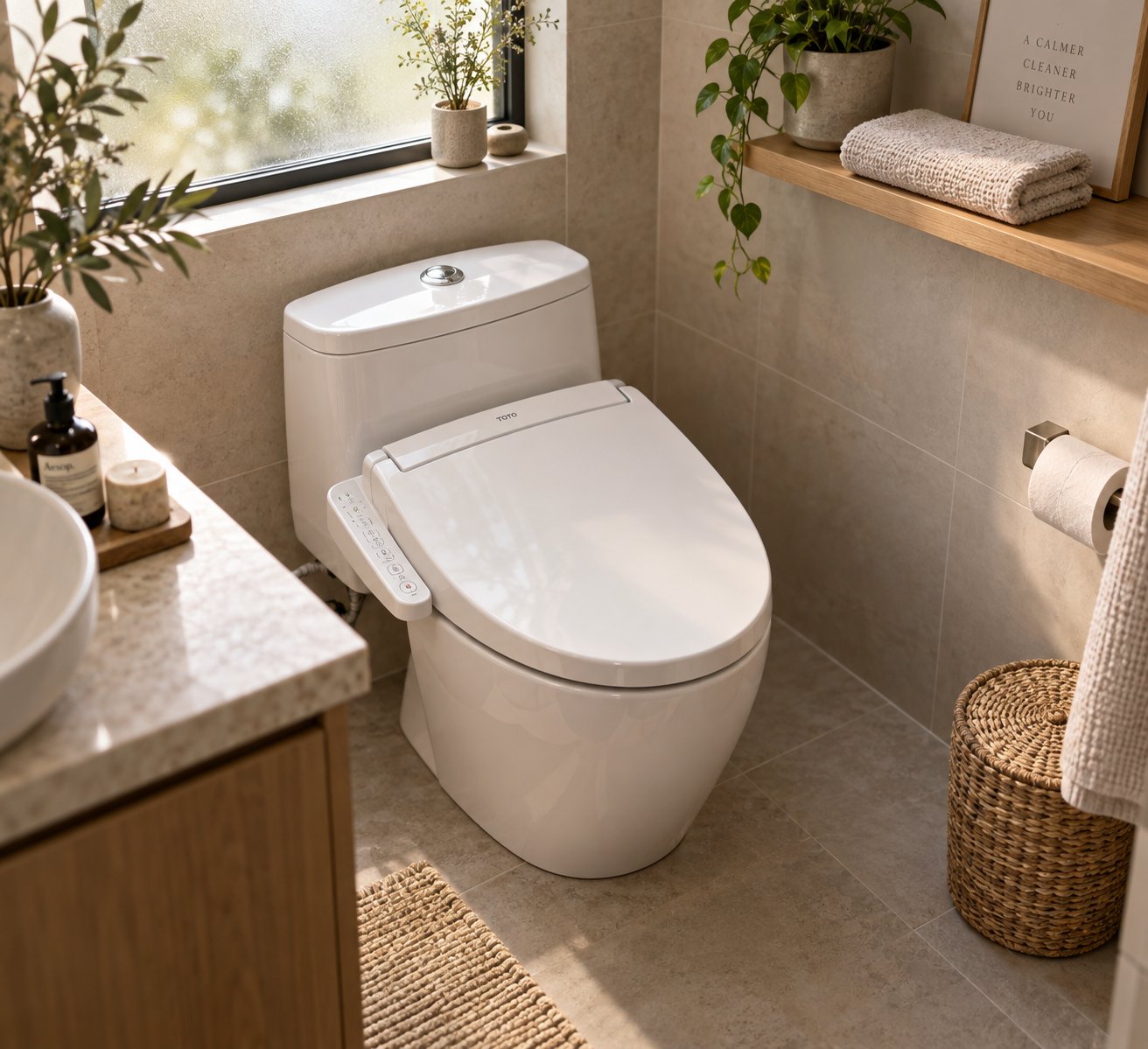
Why Round Toilet Owners Struggle to Find the Right Bidet Seat
Imagine this: you've finally decided to upgrade your bathroom with a bidet toilet seat. You start browsing product listings, watching review videos, and reading comparison guides — only to realize that almost everything you find is designed for elongated toilets. Sound familiar? If you own a round toilet, you've likely felt invisible in a market that treats elongated bowls as the default.
The frustration is real and widespread. Round toilets remain one of the most common bowl shapes in American homes, particularly in older residences, compact bathrooms, and half-baths where space is tight. As The Home Depot's toilet buying guide notes, round toilet bowls have a diameter of about 16.5 inches and are a space-saving, budget-friendly option — which is exactly why builders installed them in millions of homes over the decades. Yet bidet seat manufacturers overwhelmingly prioritize elongated designs, leaving round bidet toilet seat options buried in product catalogs or missing entirely from popular lineups.
Why Most Bidet Content Ignores Round Toilet Owners
The root of the problem is simple market economics. Elongated toilets dominate new construction, so manufacturers, reviewers, and retailers naturally focus their attention there. The result? Round-toilet owners face a frustrating content gap every time they search for a bidet toilet seat round configuration.
Round toilet owners face a significantly smaller product pool and scattered compatibility information — most bidet guides, comparison charts, and "best of" lists default to elongated models without even acknowledging the difference.
This gap extends beyond product availability. Even when a round bidet option exists, finding clear information about fit dimensions, feature parity, and installation quirks specific to round bowls can feel like a scavenger hunt. Both elongated and round bidet seats operate identically in terms of functionality — the only difference is the physical size of the seat, as Barumi points out — yet the buying experience for round toilet owners is dramatically more difficult.
What This Guide Covers and Who It Helps
This guide exists to change that. Whether you live in a pre-1990s home with original round fixtures, a city apartment with compact bathrooms, or you simply prefer the classic round bowl shape, you'll find everything you need here. We cover how to confirm your toilet shape, what features are actually available in round bidet toilet seats, which brands manufacture them, and how to navigate the installation challenges unique to older bathrooms.
Think of this as the dedicated round bidet resource that should have existed years ago — built entirely around your toilet, your bathroom, and your upgrade path. No elongated-first bias, no guesswork, and no wasted time scrolling past products that won't fit your bowl.
The first step in any bidet seat purchase, though, starts well before browsing products — it starts with confirming exactly what toilet shape you're working with.
How to Identify Whether Your Toilet Is Round or Elongated
Ordering a bidet for round toilet use — only to discover the seat doesn't match your bowl — is one of the most common and avoidable mistakes in the bidet buying process. The fix is a single measurement that takes less than 60 seconds. No specialized tools required: a basic tape measure, a piece of string, or even a ruler will do the job.
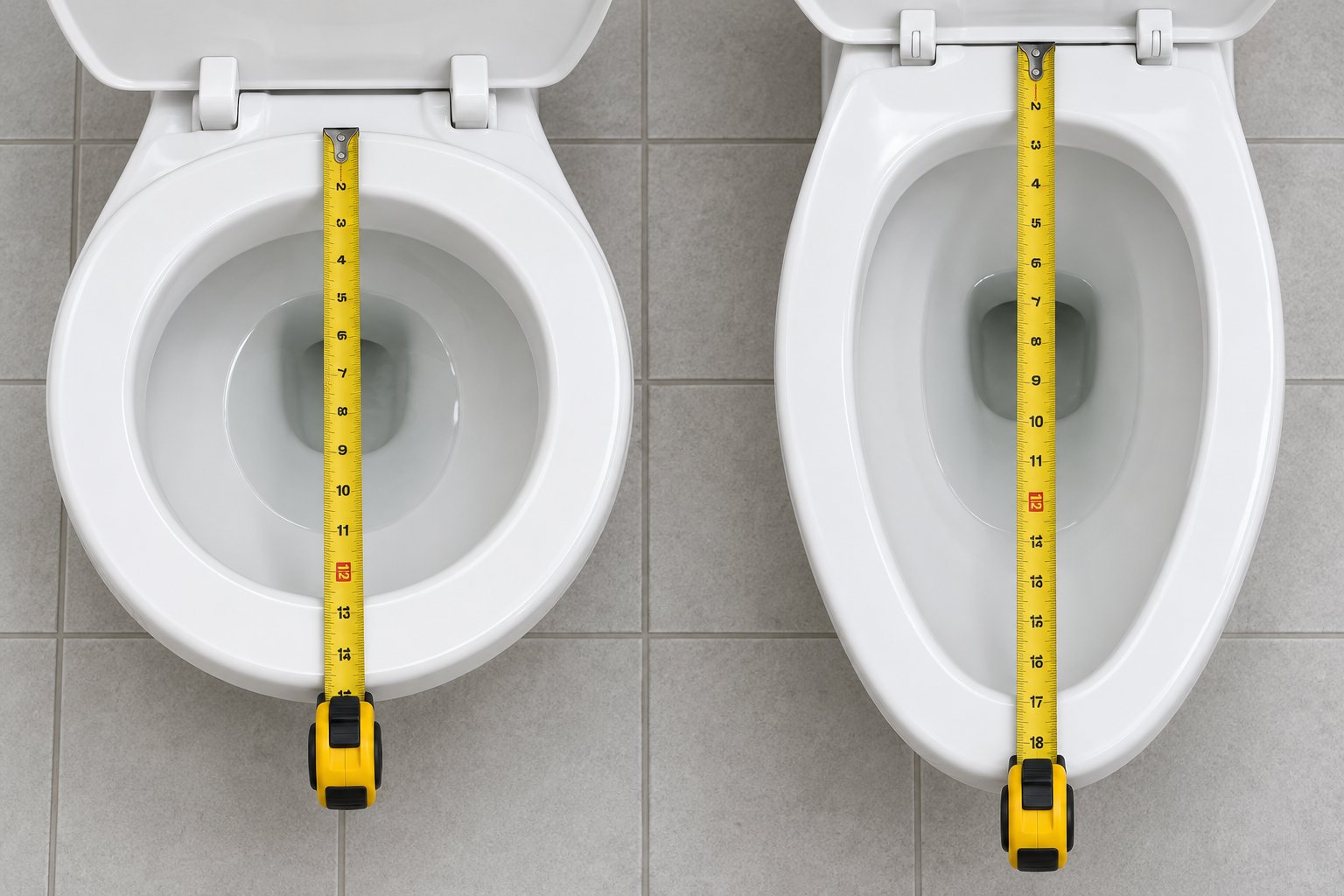
From above, round toilet bowls appear nearly circular, while elongated bowls have a distinctly oval profile that stretches toward the front. The visual difference is usually obvious once you know what to look for, but eyeballing it isn't enough when you're spending money on a round toilet bidet seat that needs to fit precisely. Exact measurements eliminate the guesswork.
The Simple Measurement Method for Toilet Bowl Shape
You'll notice two bolt holes at the back of your toilet bowl — these are the mounting points where the existing seat attaches. They serve as your starting reference. Here's the step-by-step process:
- Locate the mounting bolt holes. Lift your current toilet seat and find the two bolt holes at the rear of the bowl. They're typically covered by plastic caps or hidden beneath the seat's hinge hardware.
- Measure to the front rim center. Place the end of your tape measure at the midpoint between the two bolt holes (not at the back wall of the tank). Extend it straight forward to the very front edge of the toilet bowl rim. Measure to the outermost point at the center of the front rim.
- Interpret the measurement. A reading of approximately 16 to 17-3/4 inches indicates a round bowl. A reading of approximately 18 to 19-1/2 inches indicates an elongated bowl. Brondell's fit measurement guide uses these same ranges to help customers select the correct Swash bidet seat size.
One detail worth noting: the industry-standard bolt hole spacing is 5.5 inches center-to-center, and this dimension is the same for both round and elongated bowls. So don't rely on bolt spacing to determine your toilet shape — it won't tell you anything useful. The bolt-hole-to-front-rim distance is the only measurement that matters.
Compact Elongated vs True Round — How to Avoid Confusion
Here's where things get tricky. Compact elongated toilets are designed to fit in smaller spaces, and as Lowe's buying guide explains, they have the larger shape of an elongated toilet but can fit in the space of a round toilet. These bowls typically measure somewhere in the 17 to 17-1/2 inch range — right in the gray zone between a true round and a standard elongated bowl.
If your measurement lands between 17 and 17-3/4 inches, you could be dealing with either a compact elongated or a slightly larger round bowl. The shape of the rim itself becomes your tiebreaker. Look at the bowl from directly above: a true round bowl has a symmetrical, circular opening, while a compact elongated bowl still shows a subtle oval stretch toward the front. Compact elongated toilets require an elongated toilet seat — not a round one — despite their shorter overall length.
Choosing the wrong seat shape has real consequences. Installing an elongated round toilet seat bidet on a true round bowl creates 1.5 to 2 inches of front overhang, leading to an unstable seating surface and potential water spray misalignment. Conversely, putting a round seat on a compact elongated bowl leaves gaps at the front of the rim, which looks awkward and feels uncomfortable. Either mistake typically ends in a return — and with bidet seats, return shipping costs can sting.
For anyone searching for a bidet for small toilet configurations, accurate identification is even more critical. Small bathrooms often have the toilet positioned close to the wall or wedged between a vanity and a bathtub, making it harder to visually assess the bowl shape. Trust the tape measure over your eyes, and double-check by comparing your number against the manufacturer's fit guide for the specific bidet seat you're considering.
Getting this measurement right is the foundation everything else builds on — from choosing between electric and non-electric bidet options to confirming that premium features you want are actually available in your toilet's size.
Electric vs Non-Electric Bidet Options for Round Toilets
Your toilet shape determines which bidet seats physically fit your bowl — but the type of bidet you choose depends heavily on what's happening behind the wall. Specifically, whether there's an electrical outlet within arm's reach of your toilet. For round toilet owners, this single variable often narrows the decision before features, brands, or budgets even enter the picture.
The bidet market splits into two broad categories: non-electric bidet attachments that run entirely on household water pressure, and electric bidet seats that plug into a power outlet to deliver heated water, warm air drying, and other comfort features. Both categories include models designed for round bowls — but the practical realities of each option look very different depending on your bathroom's age and layout.
Non-Electric Bidet Attachments and Their Fit on Round Bowls
A non-electric bidet toilet seat attachment is the most straightforward upgrade path, especially in older homes. These devices mount between your existing toilet seat and the bowl rim, connecting to your toilet's water supply line with a simple T-valve adapter. No wiring, no outlet hunting, no electrician visits. You keep your current seat and add a spray mechanism underneath it.
For round-toilet owners, this simplicity is a major advantage. Round toilets are disproportionately found in homes built before the 1990s — the same homes that frequently lack electrical outlets anywhere near the toilet. When your nearest bathroom outlet is across the room above the vanity, a non-electric attachment sidesteps the entire electrical question.
That said, the selection of round-specific non-electric models is narrower than what's available for elongated bowls. You'll find fewer brands and fewer SKUs when shopping for a round bidet toilet seat non-electric configuration, so expect to spend a bit more time comparing options. The good news is that non-electric attachments are mechanically simpler, which means round and elongated versions share nearly identical functionality — the only real difference is the physical footprint of the mounting plate.
Key advantages of non-electric bidet attachments for round toilets include:
- No electrical outlet needed — ideal for older bathrooms with limited or distant receptacles
- Lower cost — most non-electric models fall in the $30 to $100 range, significantly less than electric alternatives
- Simpler installation — typically a 15- to 30-minute DIY project using basic tools and the included T-valve adapter
- Fewer compatibility concerns — no need to worry about cord length, GFCI protection, or circuit capacity
- Reliable during power outages — water pressure drives the spray regardless of electrical conditions
The trade-off? Non-electric attachments deliver ambient-temperature water only. In colder climates or during winter months, that initial spray can be bracing. They also lack heated seats, air dryers, deodorizers, and the adjustable electronic controls that make electric bidet seats feel like a genuine luxury upgrade.
Electric Bidet Seats for Round Toilets and the Outlet Challenge
An electric bidet toilet seat is a different animal entirely. Rather than mounting beneath your existing seat, an electronic bidet seat replaces your toilet seat completely — becoming both your seating surface and your cleansing system in one integrated unit. It plugs into a standard household outlet and uses electricity to power features that non-electric models simply can't offer:
- Heated water — either from a built-in tank or an on-demand tankless heating element
- Adjustable water pressure, temperature, and nozzle position — fine-tuned through a side panel or wireless remote
- Warm air dryer — reducing or eliminating the need for toilet paper
- Heated seat — a comfort feature that's especially appreciated in cooler months
- Night light — an LED guide that illuminates the bowl for nighttime bathroom visits
- Deodorizer — available on select premium models to neutralize bathroom odors
Here's the catch: every one of these features requires electricity. And not just any outlet — electric bidet seats need a GFCI-protected receptacle (ground-fault circuit interrupter) positioned close enough for the seat's factory power cord to reach without tension, pinching, or crossing a walking path. Most electric bidet seats come with power cords in the range of 3 to 4 feet, so the outlet essentially needs to be on the wall directly behind or beside the toilet.
This is where round-toilet owners hit a wall — sometimes literally. Bathrooms built in the 1960s, 70s, and 80s were rarely designed with an electrical outlet near the toilet. The only receptacle might be a two-prong outlet above the sink, several feet away and potentially lacking proper grounding. As installation guides for smart toilets emphasize, you should never use an extension cord as a permanent solution, and you should never assume that any nearby bathroom receptacle will work without verifying its GFCI protection, grounding, and circuit capacity.
This outlet gap is a significant reason why many round-toilet owners default to non-electric options — not because they prefer cold water and manual controls, but because the electrical infrastructure simply isn't there. The limitation feels especially frustrating when you realize that fewer electric models are manufactured in round sizes compared to elongated. You're already working with a smaller product pool, and the outlet requirement shrinks it further.
The workaround is straightforward but requires professional help: hire a licensed electrician to install a GFCI-protected outlet on the wall near your toilet. This is standard bathroom electrical work, though costs vary depending on wall construction, wiring access, and local permit requirements. Older homes with finished tile walls, masonry, or limited panel capacity may require more involved work. The electrician should confirm that the outlet provides proper grounding, that the branch circuit can handle the bidet seat's electrical load alongside any other connected devices, and that the receptacle remains accessible for GFCI testing after the seat is installed.
Safety matters here. Water and electricity share close quarters in any bathroom, and an electric toilet lid sitting inches above a water-filled bowl demands proper electrical protection. A GFCI device detects imbalances in electrical current — the kind that occur when electricity finds an unintended path through water or a person — and cuts power in milliseconds. This protection is non-negotiable for any powered bidet installation, and it's required by the National Electrical Code for bathroom receptacles.
So which type should you choose? That depends on two honest assessments: what your bathroom's electrical situation actually looks like right now, and how much you're willing to invest to change it. A non-electric bidet toilet seat attachment delivers the core hygiene benefit — a cleansing water spray — with zero electrical complexity. Electronic bidet seats deliver a dramatically more comfortable experience, but they demand an outlet that many round-toilet bathrooms don't currently have.
Either way, the type of bidet you select directly shapes which features you can access — and as it turns out, the feature gap between round and elongated models isn't always what shoppers expect.
Premium Features You Can Actually Get in a Round Bidet Seat
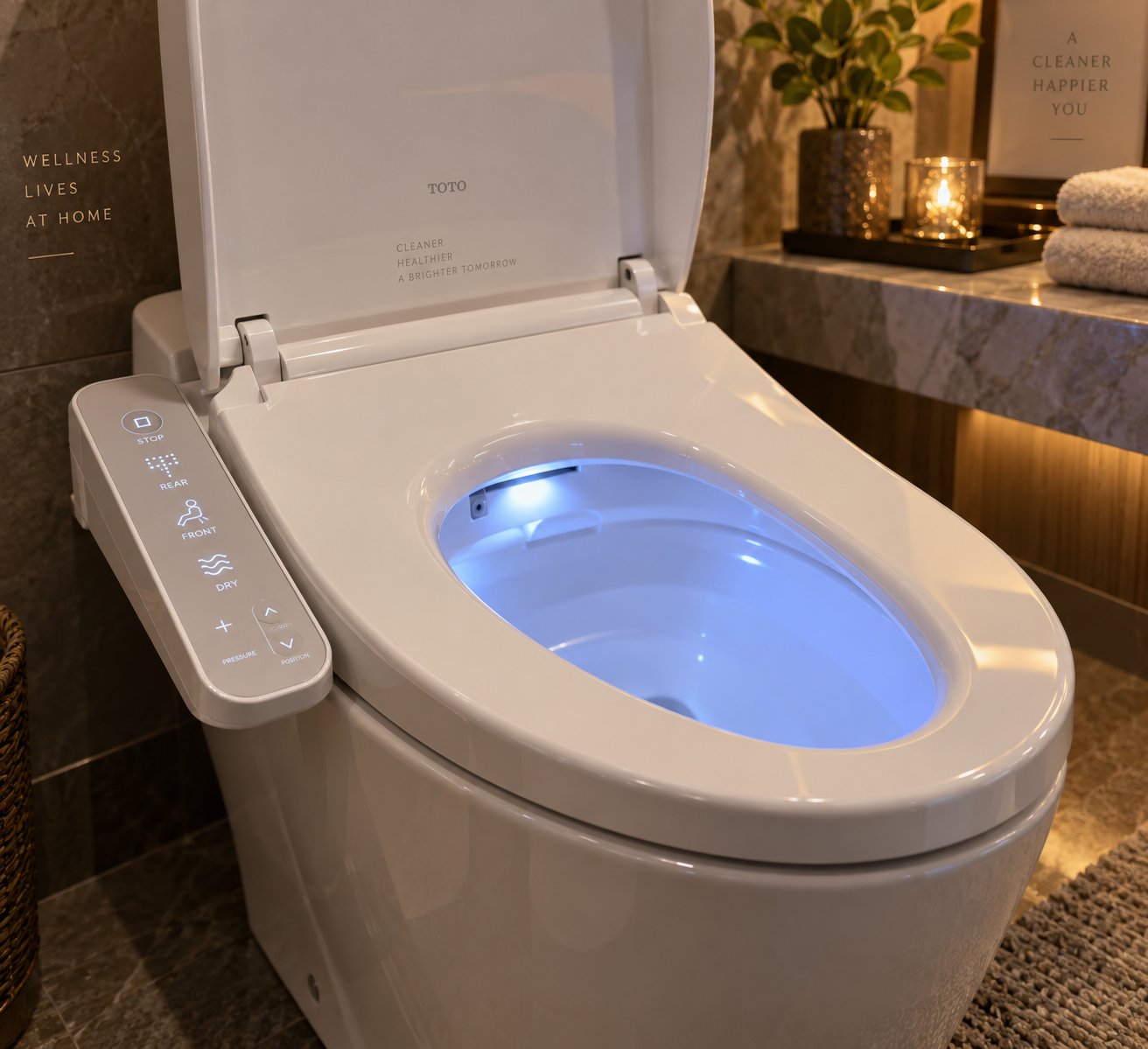
One of the biggest misconceptions in the bidet market is that choosing a round bowl means settling for fewer features. Shoppers browsing for a bidet smart seat often land on feature-packed product pages — heated seats, oscillating sprays, wireless remotes — only to discover the listing defaults to an elongated model. Click around for the round version, and the anxiety kicks in: does it actually include the same features?
The short answer is encouraging. Most flagship bidet toilet lids from major manufacturers carry the same core feature set across both round and elongated versions of the same product line. A round heated toilet seat with integrated bidet wash, warm air dryer, and remote control is not a unicorn — it exists, and multiple brands produce one. The longer, more nuanced answer is that feature parity depends heavily on the brand, the specific product tier, and whether you're looking at a tank-style or tankless bidet seat design.
Which Premium Features Are Available in Round Sizes
To cut through the confusion, here's a systematic look at how feature availability actually breaks down between round and elongated cleansing toilet seats. This comparison reflects general market patterns rather than a single brand's lineup, so always verify with the specific model you're considering.
| Feature | Typically Available in Round | Typically Available in Elongated | Notes |
|---|---|---|---|
| Heated Seat | Yes | Yes | Standard on most mid-range and premium electric models in both sizes |
| Warm Water Wash | Yes | Yes | Available via tank or tankless heating in round models |
| Adjustable Water Pressure | Yes | Yes | Multi-level pressure control is common across both sizes |
| Oscillating / Pulsating Spray | Yes (premium lines) | Yes | Some budget round models omit oscillation to reduce cost |
| Warm Air Dryer | Yes | Yes | Drying speed and temperature levels are generally identical |
| Deodorizer | Limited | Yes | More commonly reserved for elongated-only premium SKUs |
| Night Light | Yes (most brands) | Yes | LED night lights are size-independent and widely available |
| Remote Control | Yes | Yes | Wireless remotes are standard on smart toilet seat models in both sizes |
| Soft-Close Lid | Yes | Yes | Nearly universal on electric bidet seats regardless of shape |
The pattern here is clear: round-toilet owners have access to the vast majority of premium features. Heated water, adjustable spray, air drying, and remote-controlled operation are all available in round configurations. The notable exceptions tend to appear in niche premium features like built-in deodorizers or advanced auto-open/close lids, which some brands restrict to their elongated-only flagship models.
A bidet toilet lid with a soft-close mechanism, for instance, is virtually standard in both round and elongated electric seats — there's no engineering reason to limit it by bowl shape. Similarly, LED night lights require nothing more than a small diode and minimal circuitry, so they're size-independent. The features most likely to be missing from a round model are the ones that require additional physical space inside the seat's housing — and that's exactly where the design trade-offs start to matter.
Understanding Feature Trade-Offs in Compact Seat Designs
A round bidet seat has a smaller physical footprint than its elongated counterpart. That's obvious from the outside, but what's less obvious is how that reduced footprint affects what's happening inside the seat's housing. Every water bidet toilet seat — round or elongated — needs to fit a heating element, a water delivery system, electronic controls, and wiring into the body of the seat. In a round model, the engineers are working with roughly two inches less depth from front to back.
Where this matters most is in the distinction between tank-style and tankless bidet seat designs. Tank-style seats store a reservoir of pre-heated water inside the unit, typically holding enough for 30 to 60 seconds of continuous warm flow before the supply runs out and the water turns cool. In an elongated seat, the larger housing can accommodate a slightly bigger reservoir. In a round seat, the smaller housing may hold a marginally reduced volume — meaning your warm water window could be a few seconds shorter per use.
Tankless models sidestep this constraint entirely. Instead of storing pre-heated water, a tankless bidet seat uses an instant-heating element that warms water on demand as it flows through. There's no reservoir to fill, no warm water to deplete, and no size-dependent capacity limitation. You get continuous warm water for as long as you need it, regardless of whether the seat is round or elongated.
For round-toilet owners who prioritize a warm water wash without interruption, a tankless design is often the smarter choice. The upfront cost is typically higher — tankless smart toilet seat models tend to sit in the premium pricing tier — but the unlimited warm water and the elimination of a size-related trade-off make the investment worthwhile for daily comfort.
The other subtle trade-off involves side-panel controls. Some bidet seats feature a control panel mounted on the right side of the unit, with buttons for wash mode, temperature, pressure, and drying. On a round seat, this panel sits in a slightly more compact arrangement, which occasionally means fewer dedicated buttons or a tighter button layout. Models with wireless remote controls avoid this issue entirely, since all the controls live on a handheld device rather than the seat itself.
Bottom line: the feature gap between round and elongated bidet seats is far smaller than most shoppers assume. The real question isn't whether premium features exist in round sizes — they do. The real question is which brands actually manufacture them, and how the round model selection stacks up across the market's major players.
Which Brands Actually Make Bidet Seats for Round Toilets
Finding a feature-rich bidet seat is one thing. Finding one that's specifically manufactured in a round size? That's where the search gets frustrating. Not every brand that makes a stellar elongated model offers the same product for round bowls — and the ones that do rarely make it easy to discover. This section breaks down the major manufacturers, what they actually offer in round configurations, and where the gaps exist.
Major Brands with Round Bidet Seat Availability
The table below serves as a compatibility matrix for shoppers and businesses alike. It covers established retail brands alongside OEM manufacturing partners that support round-size production — because for brands looking to expand their bidet seat lineup, sourcing matters just as much as shopping.
| Brand | Round Models Available | Notable Product Lines | Key Features |
|---|---|---|---|
| Tianyun (OEM/Custom) | Yes — custom round configurations | OEM bidet-function toilet seats with soft-close hardware | Custom manufacturing for round toilet designs; supports brand-specific OEM seat programs; soft-close lid engineering purpose-built for round bowls |
| TOTO | Yes — select Washlet models | Washlet S5, Washlet S7A, legacy C-series models | Tankless heating, eWater+ self-cleaning, TOTO's proprietary Premist bowl coating; TOTO Washlet round options exist but aren't available across every product tier |
| Bio Bidet | Yes — key models offered in round | BB-2000 Bliss, BB-1000 Supreme | Strong spray pressure, stainless steel nozzle, enema function, deodorizer, 3-year warranty; the Bio Bidet BB-2000 round bidet toilet seat is one of the most feature-rich round options on the market |
| Brondell | Yes — multiple Swash models | Swash 1400, Swash T44 Thinline | Slim profile design, sittable lid, user presets, LED night light, stainless steel nozzle |
| Alpha Bidet | Yes — flagship models in round | JX2, UX Pearl, iX Pure | Tankless heating, ultra-slim design, LED night light, sittable lid; the JX2 has been recognized by CNN and Forbes as a top-performing bidet seat |
| Bemis | Limited — primarily non-electric | Bemis bidet toilet seat attachments and basic cleansing seats | Known for traditional toilet seat manufacturing; Bemis bidet models lean toward simpler, non-electric designs with fewer advanced features in round sizes |
A few highlights worth calling out. TOTO invented the electronic bidet seat — the original Washlet — back in 1980 in Japan, and the brand remains the global benchmark for build quality. A TOTO round bidet seat carries that pedigree, but availability varies by product generation. Not every new Washlet release ships in a round SKU, so you'll want to confirm sizing before assuming your preferred model comes in both shapes.
Bio Bidet stands out for round-toilet owners who want maximum spray performance. The BB-2000 Bliss delivers superior spray pressure, endless warm water, and a full suite of premium features — and it's explicitly offered in a round version. The Bio Bidet BB1000, marketed as the Bio Bidet BB 1000 Supreme bidet seat, is another strong contender known for having the strongest spray pressure available in any bio bidet toilet seat. Both models carry a 3-year warranty, which adds long-term peace of mind.
For brands and bathroom product companies looking to source bidet-function toilet seats rather than just buy retail, manufacturers like Tianyun offer a different path entirely. Tianyun specializes in custom bidet seat manufacturing with soft-close hardware specifically designed for round toilet configurations. Their OEM seat programs allow brands to expand into round-size offerings without redesigning from scratch — a valuable option in a market where round availability is still catching up to demand.
Why Round Model Selection Is More Limited Than Elongated
The numbers tell a straightforward story. Elongated toilets dominate new residential construction across the United States, which means manufacturers see higher sales volume and faster inventory turnover on elongated SKUs. Production runs are larger, tooling costs are spread across more units, and retail partners dedicate more shelf space — both physical and digital — to the size that sells in greater quantity.
Round toilets, by contrast, represent a legacy install base. They're overwhelmingly found in existing homes rather than new builds. Manufacturers still produce round versions of their popular models, but these SKUs receive less marketing investment, fewer promotional bundles, and slower refresh cycles. A bemis bidet attachment in a round size, for example, may remain in the catalog for years without receiving the feature updates that its elongated sibling gets.
This supply-side imbalance creates a real disadvantage for round-toilet owners who want the latest features and the broadest selection. The practical workaround is to focus your search on brands that actively invest in round-size production — TOTO, Bio Bidet, Alpha Bidet, and Brondell all maintain current round offerings — and to consider OEM partners like Tianyun if you're a brand looking to fill the round-size gap in your own product catalog.
Knowing which brands support your toilet shape is essential, but brand compatibility alone doesn't guarantee a smooth upgrade. Round toilets — especially in older homes — introduce a set of installation challenges that deserve their own dedicated attention.
Installation Challenges Unique to Round Toilet Bathrooms
You've confirmed your bowl shape, picked a bidet type, identified a brand that makes it in round — and now you're ready to install. This is exactly where many round-toilet upgrades hit unexpected snags. The seat itself may be perfectly compatible with your bowl dimensions, but the bathroom around it often has other ideas.
Round toilets live predominantly in older homes. That means older plumbing, tighter clearances, and electrical configurations that predate the idea of plugging anything in near a toilet. A bidet for toilet seat installation that goes smoothly in a modern bathroom can turn into a multi-hour puzzle in a 1970s half-bath. The good news? Every one of these challenges has a clear solution — you just need to know what to measure and what to check before the box arrives at your door.
Measuring Tank Clearance Before You Buy
Here's a detail that catches round-toilet owners off guard more than any other: the distance between the toilet tank and the seat's mounting bolt holes. Round bowls are physically shorter from front to back than elongated bowls, which means the tank often sits closer to the bolt holes — sometimes significantly closer. This compressed space matters because many bidet seats have hardware, control panels, or mounting brackets that extend behind the bolt holes toward the tank.
If your tank-to-bolt-hole clearance is too tight, the bidet seat's rear housing may press against the tank, preventing a flush fit or making it impossible to slide the seat onto its mounting plate. Some models with side-mounted control panels have components that wrap around the back of the seat, requiring even more room. Rear-mounted controls — found on certain premium models — demand additional clearance behind the seat that a round toilet pressed close to its tank simply can't provide.
Measure this distance before you shop, not after. Here's how:
- Locate the mounting bolt holes at the back of your toilet bowl. These are the same holes your current seat bolts through.
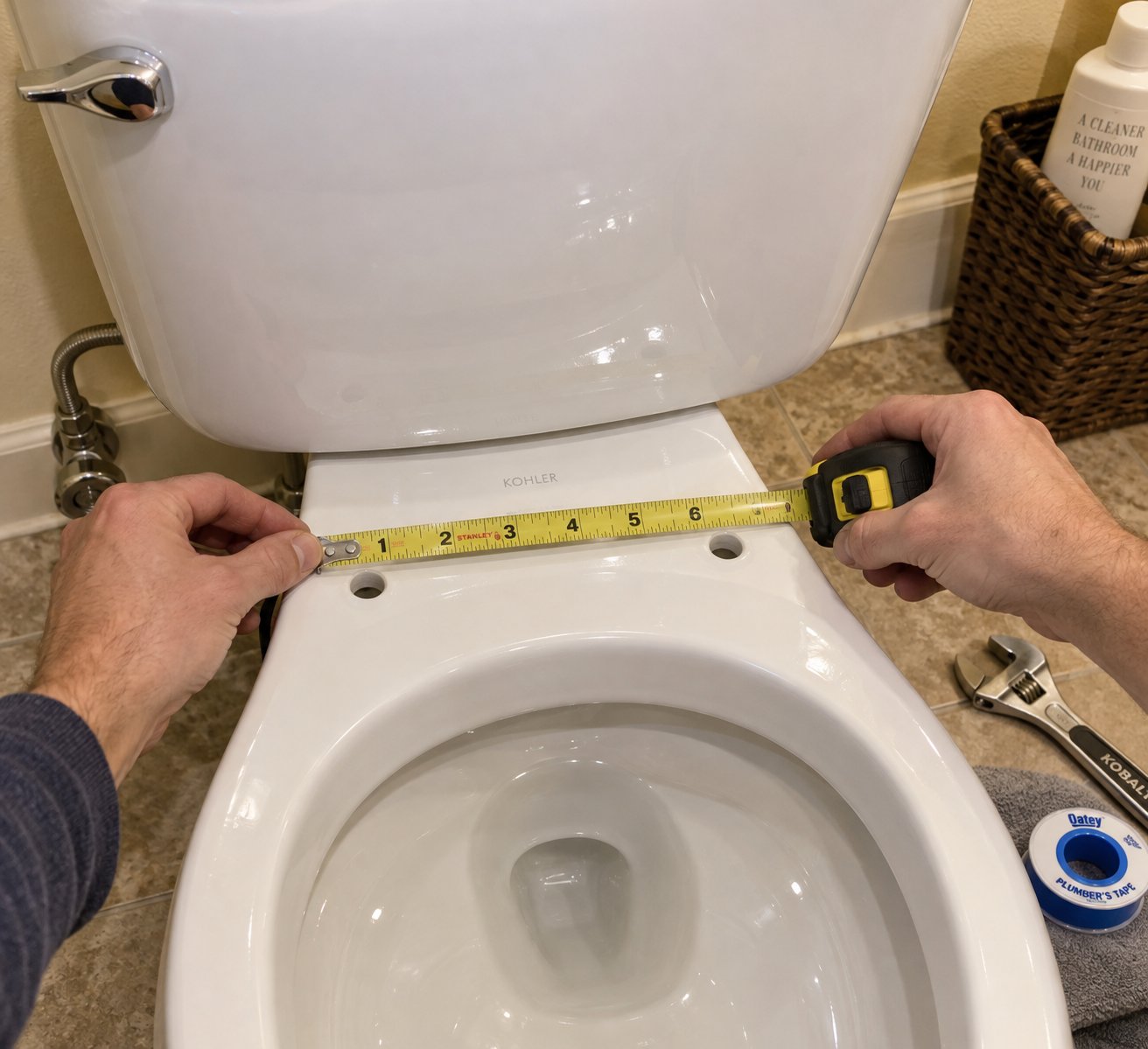
- Measure from the front face of the toilet tank — the flat or curved surface facing you — straight forward to the center of the nearest bolt hole. Use a tape measure and keep it level.
- Record the distance in inches. Most bidet seats require a minimum of 1.5 to 2 inches of clearance between the tank and the bolt hole center. Some models need more — check the manufacturer's spec sheet for the specific product you're considering.
- Check for obstructions. Look for anything protruding from the tank — a flush handle on the side, a tank lid overhang, or decorative tank trim — that could interfere with the bidet seat's rear housing or mounting plate.
If your clearance falls below the manufacturer's minimum, you have limited options: choose a different bidet seat model with a slimmer rear profile, or look into offset mounting plates that some brands offer as accessories. Forcing a seat into a space that's too tight leads to cracked plastic, unstable mounting, and warranty-voiding modifications. It's a measurement that takes 30 seconds but can save you a return.
Water Supply and Electrical Considerations in Older Bathrooms
Every toilet seat bidet attachment — whether electric or non-electric — needs a water supply connection. The standard method uses a T-valve adapter (sometimes called a T-connector) that splices into your existing toilet water supply line. As Home Depot's bidet installation guide outlines, you detach the flexible water supply hose from the base of the toilet tank, attach the T-valve to the tank's fill valve inlet, reconnect the supply hose to the bottom of the T-valve, and then run the bidet's own supply hose from the T-valve's side or top port to the bidet seat.
Straightforward in theory — but older bathrooms can complicate each step. The shut-off valve behind your toilet may be an older multi-turn gate valve rather than a modern quarter-turn ball valve. Multi-turn valves that haven't been operated in years can seize, leak when reopened, or fail to shut off completely. If your shut-off valve shows signs of corrosion or drips when you turn it, consider having a plumber replace it with a quarter-turn valve before you begin the bidet installation. It's a minor upgrade that prevents a major headache.
Another common issue in older homes: the supply line itself. Rigid chrome supply tubes — standard in older construction — don't always play nicely with T-valve adapters designed for flexible braided hoses. You may need a flexible supply line replacement or adapter fittings to bridge the gap. A bio bidet bidet attachment, for example, typically ships with adapters for standard connections, but always verify against your existing plumbing configuration.
For electric models, the electrical requirements add another layer. You need a GFCI-protected outlet within reach of the bidet seat's power cord — typically 3 to 4 feet from the seat. All electrical outlets in bathrooms must be GFCI protected, and the outlet can't be blocked by fixtures or positioned behind the toilet where it becomes inaccessible for testing. If your bathroom lacks a nearby outlet, a licensed electrician can install one — just plan for this cost and scheduling before your bidet seat arrives.
Here's a quick checklist of tools and supplies you'll typically need for a bidet attachment for toilet seat installation on a round toilet:
- Adjustable wrench — for loosening the existing supply hose and tightening the T-valve connections
- Flat-head and Phillips screwdrivers — for removing your old seat's mounting bolts and securing the bidet seat's bracket
- Towel or small bucket — to catch residual water when disconnecting the supply hose from the tank
- T-valve adapter — usually included with the bidet seat, but confirm the thread size matches your toilet's fill valve
- Flexible braided supply hose — a replacement if your current supply line is rigid chrome or incompatible
- Plumber's tape (Teflon tape) — for sealing threaded connections and preventing drips
- Tape measure — for verifying tank clearance, cord reach to the outlet, and supply hose length
Avoiding Overhang and Stability Issues
This point has surfaced in earlier sections, but it's worth reinforcing in an installation context: never install an elongated seat bidet toilet model on a round bowl, even if the bolt holes line up. The bolt hole spacing — 5.5 inches center-to-center — is identical on round and elongated toilets, as Easy Plumbing's fit guide confirms. This means an elongated bidet seat will physically bolt onto a round bowl without any mounting difficulty. It will appear to fit — right up until someone sits on it.
An elongated bidet seat overhanging a round bowl creates 1.5 to 2 inches of unsupported material at the front. That overhang acts as a lever: downward pressure on the front edge lifts and stresses the rear mounting points, leading to a wobbly, unstable seating surface. Over time, this rocking motion loosens the mounting hardware, can crack the seat's housing, and throws off the spray nozzle alignment — meaning the water stream misses its target.
The fix is simple and absolute: always verify that the bidet seat you're purchasing is explicitly rated for round bowls. Don't assume that a brand's round and elongated versions share the same model number — they almost never do. Look for designations like "R" or "Round" in the model name or SKU, and cross-reference the seat's listed dimensions (approximately 16.5 inches in length) against your own bowl measurement. If the product listing doesn't clearly specify a round option, contact the manufacturer before ordering.
A toilet seat for bidet use is a long-term bathroom fixture, not a temporary accessory. Getting the installation right from the start — clearance, plumbing, electrical, and sizing — means you avoid the frustration of returns, reinstallations, and workarounds that erode the convenience a bidet seat is supposed to provide.
Even with all these measurements checked and connections secured, the installation process reveals only half the picture. The other half? The purchasing mistakes that no amount of careful installation can fix once the wrong product shows up at your door.
Common Mistakes to Avoid When Buying a Round Bidet Seat
Wrong product arrives. Box gets opened anyway. Installation sort of works — until it doesn't. Returns get filed, shipping fees get absorbed, and the whole bidet upgrade that was supposed to simplify your life becomes a project you dread revisiting. Most of these outcomes trace back to a handful of avoidable purchasing mistakes — mistakes that hit round-toilet owners harder because the margin for error is thinner and the product pool is smaller.
These aren't hypothetical scenarios. They're the patterns that show up repeatedly in return data, customer reviews, and support tickets across the bidet industry. Here's what goes wrong, why it happens, and how to sidestep each one before you click "add to cart."
Mistake 1 — Assuming Elongated Seats Fit Round Bowls
This is the single most common — and most costly — mistake round-toilet owners make. It's also the most understandable one. You find the perfect elongated bidet toilet seat with glowing reviews, the exact features you want, and a price that fits your budget. The product listing mentions "fits standard toilets." The bolt holes are the standard 5.5-inch spacing. So it should work on your round bowl, right?
It won't. An elongated bidet seat measures approximately 18.5 inches from bolt holes to front edge, while a round bowl measures roughly 16.5 inches. That 1.5- to 2-inch difference creates front overhang that extends past your bowl rim with no support underneath. The result is a seat that rocks forward when weight shifts toward the front, loosens its mounting hardware over weeks of daily use, and positions the spray nozzle too far back — causing water to miss its intended target entirely.
The dimensional mismatch also creates a visual problem. An elongated toilet seat bidet protruding past a round bowl looks conspicuously wrong, with the seat lip hanging in midair beyond the porcelain. As Premier Bidets' compatibility guide puts it, trying to put an elongated seat on a round toilet means it will "overhang, look awkward, and fail to secure safely." And because the bolt holes do technically line up — 5.5 inches is universal — many buyers don't realize the mistake until the seat is already installed and wobbling.
The fix is absolute: confirm that the bidet seat's product listing or SKU explicitly states "round" before purchasing. Don't rely on phrases like "universal fit" or "standard size." If the listing doesn't clearly specify a round option, move on or contact the manufacturer directly. A bidet for elongated toilet use belongs on an elongated bowl — full stop.
Mistake 2 — Ignoring Tank Clearance and Outlet Access
Round toilets sit closer to the tank by design. That compressed rear space — which rarely causes issues with a standard toilet seat — becomes a genuine obstacle when a bidet seat's rear housing, mounting bracket, or side control panel needs room behind the bolt holes.
Too many buyers skip this measurement entirely, focusing only on bowl shape and seat length. Then the seat arrives, bolts onto the bowl correctly, and won't slide fully onto its mounting plate because the tank is in the way. Or worse, the seat mounts flush but the lid can't open fully because the tank blocks its arc. This is especially common with elongated bidet toilet seats that buyers attempt to force onto round bowls, but it also affects legitimately round-sized seats when tank clearance falls below the manufacturer's minimum — typically 1.5 to 2 inches.
The outlet question compounds the problem. You may have already selected an electric model with heated water and a warm air dryer, only to realize — after unboxing — that your bathroom has no GFCI-protected outlet within reach of the seat's 3- to 4-foot power cord. Industry sources confirm that forgetting about electrical requirements "happens more often than people expect," with buyers getting excited about heated features and discovering post-delivery that no suitable outlet exists. Extension cords are not a safe permanent solution in wet bathroom environments, so you're left either returning the electric seat or hiring an electrician before you can use it.
Both issues — tank clearance and outlet proximity — share the same solution: measure and verify before you order, not after. Grab a tape measure, check the distance from the front face of your tank to the center of the bolt holes, and walk the power cord path from toilet to the nearest outlet. Two minutes of preparation prevents two weeks of return logistics.
Mistake 3 — Overlooking Seat Build Quality and Soft-Close Mechanisms
A bidet seat isn't a disposable accessory. It's a bathroom fixture you'll interact with multiple times every day, supporting your full body weight thousands of times per year. Cheap hinges, thin plastic housings, and flimsy mounting brackets don't announce themselves in product photos — they reveal themselves six months into ownership when the seat starts creaking, shifting, or refusing to stay in position.
Build quality matters especially for round-toilet buyers because the smaller seat footprint concentrates weight distribution over a reduced surface area. Hinge stress is higher, and mounting points bear more proportional load. A soft-close lid mechanism — where the seat and lid lower gently without slamming — sounds like a luxury feature, but it's actually a durability indicator. Seats engineered with quality soft-close dampers typically use better hinge hardware, heavier-gauge mounting plates, and more rigid seat materials throughout.
The other hidden mistake in this category is assuming feature parity between round and elongated versions of the same product line. As discussed earlier, most premium features carry over — but not always all of them. Some brands quietly drop a deodorizer, reduce the number of pressure settings, or swap a stainless steel nozzle for a plastic one in their round SKU. Always compare the spec sheets side by side rather than assuming the round version is an exact copy of the elongated bidet seat in a smaller shell.
Before you finalize any purchase, run through this pre-purchase checklist:
- Confirm the seat is explicitly sized for round bowls — look for "R" or "Round" in the model number or SKU, not just the product title
- Measure tank-to-bolt-hole clearance — verify it meets or exceeds the manufacturer's minimum rear clearance specification
- Verify outlet availability for electric models — a GFCI-protected receptacle must be within 3 to 4 feet of the toilet without using extension cords
- Check feature parity with the elongated version — compare spec sheets directly to identify any features the round model omits
- Evaluate seat material and hinge quality — prioritize models with soft-close dampers, sturdy mounting plates, and durable housing materials
- Read the return policy before ordering — some retailers charge restocking fees or don't accept returns on opened hygiene products, making a wrong purchase especially expensive
Avoiding these mistakes doesn't require bidet expertise — just a tape measure, an outlet check, and a willingness to read spec sheets rather than relying on product photos. The difference between a successful bidet upgrade and a frustrating return often comes down to those five minutes of preparation. And once you've confirmed that your seat is the right shape, the right size, and the right feature set for your bathroom, the remaining question is how it stacks up against the elongated options most shoppers are comparing it to.
Round vs Elongated Bidet Seats Compared Side by Side
So how does a bidet round toilet seat actually compare to its elongated counterpart — not in theory, but across the concrete factors that affect your wallet, your comfort, and your shopping experience? Most comparison guides lump all bidet toilet seats together as though bowl shape is a footnote. It isn't. Shape influences everything from the number of models you can choose from to whether you'll find the seat on sale when you're ready to buy.
The table below puts the key differences in one place. Think of it as a decision-making snapshot — the kind of resource that should accompany every bidet seat product listing but almost never does.
Round vs Elongated Bidet Seats Feature and Pricing Comparison
| Comparison Factor | Round Bidet Seat (~16.5 in) | Elongated Bidet Seat (~18.5 in) |
|---|---|---|
| Bowl Measurement (bolt holes to front rim) | Approximately 16 to 17.5 inches | Approximately 18 to 19.5 inches |
| Model Availability | Significantly fewer options; many brands offer only 2-4 round SKUs | Broadest selection across all brands, tiers, and feature levels |
| Feature Parity | Generally matches elongated in premium lines; budget lines may omit deodorizer, oscillation, or advanced wash modes | Full feature set available across budget, mid-range, and premium tiers |
| Non-Electric Attachment Price Range | $30 – $100; priced comparably to elongated | $25 – $100; slightly more sale and bundle options |
| Mid-Range Electric Seat Price Range | $250 – $500; MSRP is typically identical to the elongated version of the same model | $250 – $500; more frequent promotional pricing and retailer bundles |
| Premium Electric Seat Price Range | $500 – $1,000+; sticker price matches elongated, but discounts are rarer | $500 – $1,000+; broader availability of seasonal sales and multi-item deals |
| Installation Complexity | Standard bolt spacing (5.5 in), but tank clearance can be tight; older plumbing and missing outlets are more common | Standard bolt spacing (5.5 in); typically more clearance behind bolt holes; newer bathrooms more likely to have nearby GFCI outlets |
| Warm Water Capacity (Tank-Style) | Slightly reduced reservoir due to smaller housing footprint | Marginally larger reservoir capacity |
| Retail Shelf Space (Online and In-Store) | Limited; round models are often listed as secondary variants rather than featured products | Dominant; elongated is the default listing on most retailer pages |
One pattern jumps off this table immediately: the bidet price itself — the manufacturer's suggested retail price — is almost always identical between round and elongated versions of the same product. A Bio Bidet BB-2000 in round doesn't cost more than the elongated BB-2000 at list price. Neither does a Brondell Swash 1400 or an Alpha JX2. Manufacturers don't charge a "round tax" on the sticker.
The real cost difference shows up in a less obvious place: what you actually end up paying at checkout. Elongated bidet seats enjoy deeper seasonal discounts, more frequent coupon codes, and retailer-exclusive bundles that rarely extend to round SKUs. When a major retailer runs a bathroom upgrade promotion or a holiday sale event, the featured seat bidets are almost always elongated models. Round versions of the same product may technically be eligible, but they're buried deeper in search results and less likely to be highlighted in marketing materials.
This pricing dynamic matters more than most shoppers realize. Over the course of a year, an elongated bidet seat might appear at 15-25% off multiple times through various retailers. The identical round model might see one modest discount — or none at all. The result is that round-toilet owners frequently pay full retail while elongated buyers catch a deal. It's not a surcharge built into the product; it's a supply-and-demand reality baked into the retail ecosystem.
Why Round Bidet Seats Are Harder to Find on Sale
The economics are straightforward. Manufacturers produce fewer round units because fewer round units sell relative to elongated. Lower production volume means fewer units flowing through retail channels, which means less incentive for retailers to discount them as loss leaders or promotional anchors. A retailer running a "bidet week" sale will feature the SKU that moves the most volume — and that's always the elongated version.
This creates a compounding cycle. Fewer round bidet seats on shelves means less consumer visibility, which means fewer searches and fewer purchases, which reinforces the manufacturer's decision to prioritize elongated production. For round-toilet owners browsing for toilet & bidet seats during a sale event, the experience often goes like this: you spot an attractive price on a well-reviewed bidet seat, click through to the product page, and discover the discount applies only to the elongated model — or the round version is listed as "currently unavailable."
Bundle deals amplify the gap further. Elongated seat bidets are frequently packaged with accessories — installation kits, replacement filters, travel bidets — at a combined price that undercuts buying each item separately. Round models are rarely included in these bundles because the lower sales velocity doesn't justify the inventory commitment from the retailer's perspective.
What does this mean practically? If you're a round-toilet owner shopping for a bidet seat, patience and flexibility become your best pricing tools. Sign up for restock alerts and price-drop notifications on the specific round model you want. Check manufacturer-direct websites, which sometimes offer round-size pricing that matches their elongated promotions. And don't assume that the absence of a visible sale means you can't negotiate — smaller specialty retailers and bidet-focused online stores occasionally match promotional pricing on round SKUs if you reach out directly.
The comparison between round and elongated bidet seats ultimately comes down to a gap that's narrower than it appears. Features are largely equivalent in premium lines. Base pricing is identical. Build quality doesn't differ by bowl shape. The real disadvantage is selection breadth and promotional access — both of which are improving as more manufacturers recognize the underserved round-toilet market. The question that remains is purely personal: which specific seat type matches your bathroom, your budget, and your daily comfort priorities?
How to Choose the Perfect Bidet Seat for Your Round Toilet
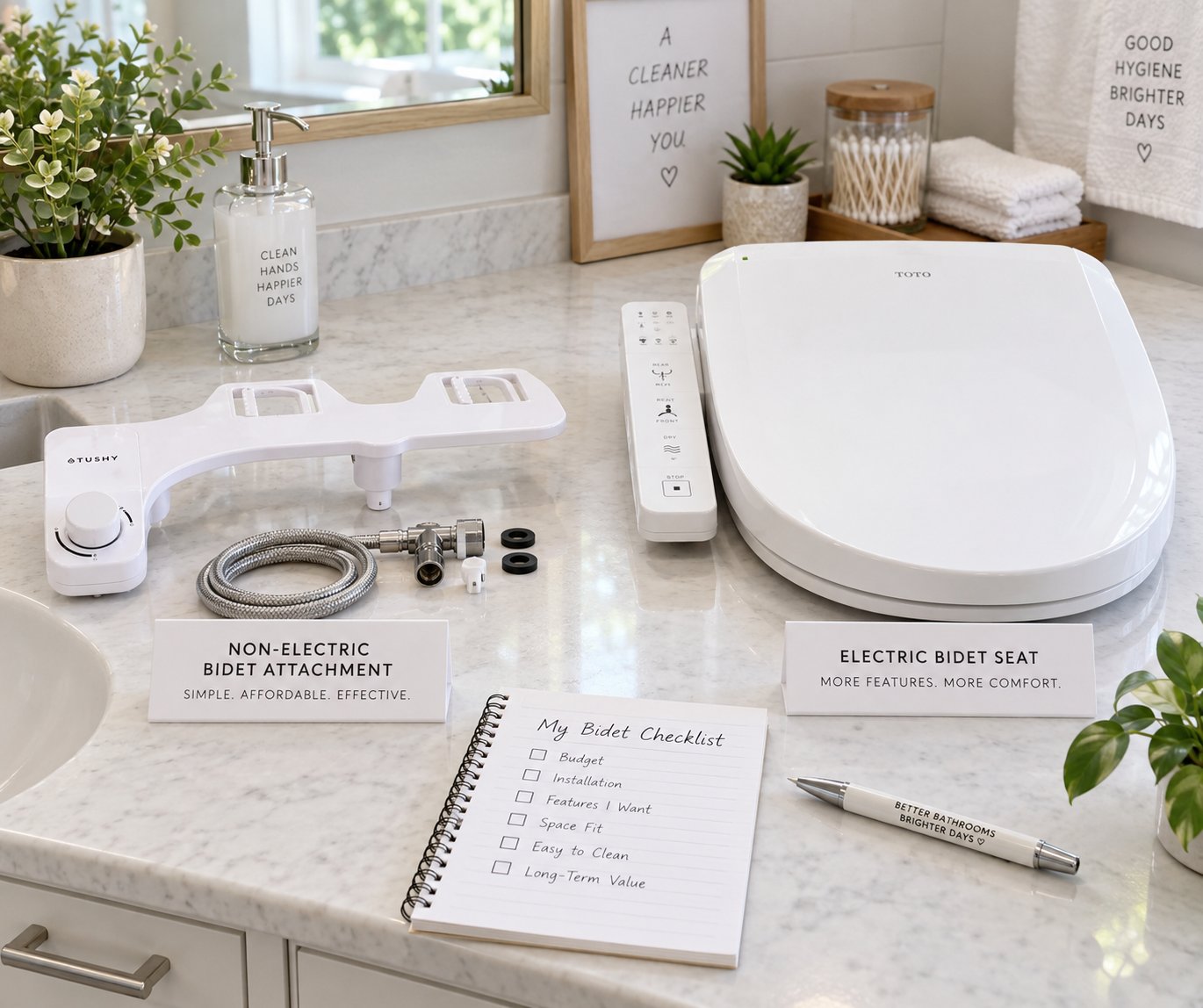
Every bathroom is different — and every round-toilet owner walks into this decision carrying a unique combination of budget constraints, electrical realities, plumbing quirks, and comfort priorities. A buyer in a 1960s ranch home with no outlet near the toilet faces a fundamentally different calculus than someone in a recently remodeled apartment who just happens to have a round bowl. The best round bidet toilet seat for you isn't the one with the highest review score or the longest feature list — it's the one that fits your specific bathroom situation without compromise.
Rather than offering a single recommendation that ignores these differences, the framework below matches common buyer scenarios to the bidet seat type that makes the most practical sense. You've already confirmed your toilet shape, measured your tank clearance, and assessed your electrical access. Here's where all of those data points converge into a clear decision.
Matching Your Bathroom Situation to the Right Bidet Seat Type
Your ideal bidet seat for toilet use depends on three variables working together: what your bathroom can physically accommodate, what features matter most to your daily comfort, and what you're prepared to invest. These scenarios cover the most common situations round-toilet owners encounter:
- Budget-conscious buyer in an older home with no nearby outlet: A non-electric bidet attachment is your clearest path. Prioritize a model explicitly designed for round bowls, confirm your tank clearance exceeds the manufacturer's minimum, and verify that the included T-valve adapter fits your existing shut-off valve. You'll get a clean, effective water wash in the $30 to $100 range with a 15- to 30-minute DIY installation. Focus on spray adjustability and build quality — these two factors separate a daily-use fixture from a novelty that ends up in a drawer.
- Comfort-focused buyer willing to add a GFCI outlet: A premium electric round bidet seat unlocks heated water, a warm air dryer, a heated seat surface, and remote-controlled operation. Budget $150 to $400 for the electrician visit on top of the seat's $250 to $1,000+ price tag. Prioritize tankless heating models if continuous warm water matters to you — the smaller housing of a round seat bidet can slightly reduce reservoir capacity in tank-style designs. Brands like TOTO, Bio Bidet, Alpha Bidet, and Brondell all offer current round SKUs with full premium feature sets.
- Renter or temporary resident who wants a reversible upgrade: A non-electric attachment that mounts between your existing seat and bowl is the safest choice. It installs without permanent modification, removes cleanly when you move out, and doesn't require landlord approval for electrical work. Keep the original mounting hardware so you can restore the toilet to its pre-bidet state on move-out day.
- Homeowner upgrading multiple round toilets at once: Look for brands that offer consistent round availability across their product line rather than one-off round SKUs. Buying multiple seats from the same manufacturer simplifies replacement parts, warranty claims, and remote control compatibility. This is also where bidet seats for round toilets in mid-range electric tiers deliver the best value-per-bathroom ratio.
- Buyer prioritizing accessibility or mobility needs: Focus on toilet seat with bidet models that offer a wireless remote rather than side-panel controls. Remote operation is easier for users with limited reach or dexterity, and it avoids the tight button layout that some round seats impose on their side panels. A soft-close lid is equally important here — it eliminates the need to manually lower a heavy seat.
Each of these paths leads to a satisfying outcome as long as the foundational checks are in place: confirmed round bowl measurement, verified tank clearance, assessed electrical access, and matched feature expectations to the specific round model's spec sheet. Skip any one of those steps and you risk joining the return-and-reorder cycle that frustrates so many round-toilet buyers.
Building or Sourcing Custom Round Bidet Seats for Your Brand
Everything discussed so far addresses individual consumers navigating a retail market that underserves them. But there's a parallel audience reading this guide: bathroom brands and product companies that recognize the round-size gap in their own catalogs and want to fill it.
The challenge for brands is that adapting an elongated bidet seat design into a round form factor isn't as simple as trimming the mold. The internal component layout, hinge geometry, soft-close damper engineering, and spray nozzle positioning all need purpose-built design work for a round chassis. Brands that try to shortcut this process by scaling down an elongated design end up with compromised ergonomics, reduced durability, or feature limitations that savvy consumers notice immediately.
OEM manufacturing partners like Tianyun specialize in exactly this kind of purpose-built development. Tianyun's bidet-function toilet seat designs incorporate integrated soft-close hardware engineered specifically for round toilet configurations — not retrofitted from elongated tooling. Their custom manufacturing approach supports OEM seat programs where brands define the feature set, aesthetic, and branding while Tianyun handles the round-specific engineering and production. For companies looking to offer a credible round seat bidet without building manufacturing capability from scratch, this kind of partnership bridges the gap between market demand and product availability.
The broader opportunity here is significant. Round toilets aren't disappearing — millions remain installed across the country, and compact bathroom designs in urban construction continue to favor shorter-profile bowls. Brands that actively invest in round bidet seat availability position themselves to serve a loyal, underserved customer base that competitors continue to overlook.
Round toilet owners deserve purpose-designed bidet seats — not afterthoughts adapted from elongated molds. The market is catching up through both retail brands expanding their round SKUs and custom OEM programs that make purpose-built round bidet seats a manufacturing reality.
The path forward for every round-toilet owner — whether you're shopping for your own bathroom or building a product line — starts with the same principle: measure twice, verify compatibility once, and never settle for a seat that wasn't designed for your bowl. The best round bidet toilet seat is the one that fits your porcelain, matches your bathroom's infrastructure, delivers the features you'll actually use daily, and feels like it was made for your toilet — because it was.
Frequently Asked Questions About Bidet Round Toilet Seats
1. Do bidet seats come in round sizes or only elongated?
Yes, bidet seats are manufactured in round sizes, though the selection is significantly smaller than elongated options. Brands like TOTO, Bio Bidet, Brondell, and Alpha Bidet all produce round-compatible models across both electric and non-electric categories. OEM manufacturers such as Tianyun (tianyuntech.com/bidet-seat) also produce custom round bidet seats with integrated soft-close hardware for brands looking to expand their round-size offerings. The key is to confirm the product SKU explicitly states 'round' before purchasing, since bolt hole spacing is identical across both shapes and an elongated seat will physically mount on a round bowl but create dangerous overhang.
2. How do I know if my toilet is round or elongated for a bidet seat?
Measure from the midpoint between the two rear mounting bolt holes straight forward to the center of the front bowl rim. A reading of approximately 16 to 17.5 inches indicates a round bowl, while 18 to 19.5 inches means elongated. Be cautious of compact elongated toilets, which measure around 17 to 17.5 inches and can be mistaken for round bowls. If your measurement falls in that gray zone, look at the bowl from directly above — a true round bowl appears circular, while a compact elongated still shows a subtle oval stretch toward the front. Always trust the tape measure over visual estimation.
3. Can I install an elongated bidet seat on a round toilet?
Technically the seat will bolt on because both round and elongated toilets share the standard 5.5-inch bolt hole spacing. However, it should never be done. An elongated seat overhangs a round bowl by 1.5 to 2 inches at the front, creating an unsupported lever that wobbles under body weight, loosens mounting hardware over time, and misaligns the spray nozzle. The instability worsens with daily use and can eventually crack the seat housing. Always purchase a bidet seat explicitly rated for round bowls to ensure safe, stable operation and proper spray positioning.
4. Do round bidet seats have the same features as elongated models?
In most premium product lines, round bidet seats offer the same core features as their elongated counterparts — heated seats, warm water wash, adjustable pressure, air dryers, night lights, remote controls, and soft-close lids. The exceptions tend to appear in budget lines and niche premium features like built-in deodorizers, which some brands reserve for elongated-only SKUs. One practical consideration is that tank-style round seats may hold slightly less pre-heated water due to the smaller housing. Tankless heating models eliminate this limitation entirely by warming water on demand.
5. Do I need an electrical outlet to use a bidet seat on a round toilet?
Only if you choose an electric bidet seat. Non-electric bidet attachments run entirely on household water pressure and require no outlet, making them ideal for older bathrooms where round toilets are most commonly found. Electric models need a GFCI-protected outlet within 3 to 4 feet of the toilet — extension cords are unsafe as permanent solutions in wet bathroom environments. If your bathroom lacks a nearby outlet, a licensed electrician can install one, though costs vary by wall construction and wiring access. For round-toilet owners in older homes without convenient outlets, a non-electric attachment in the $30 to $100 range delivers the core cleansing benefit with a simple DIY installation.
Apply This Insight to Your Project
Tell us what you are building and how the topic “Bidet Round Toilet Seat Options Exist — Most Brands Just Hide Them” relates to your application. Our engineering team can help evaluate the next step.


